Natural harmony
In a home inspired by Japan and designed to endure, Sugi by Pentarch embodies an eco-responsible philosophy.
Sustainability in architecture is often discussed in terms of performance, ratings and renewable materials. All of that matters. But there is another dimension to sustainable design that is just as important: creating homes with the depth, integrity and permanence to remain valued for decades to come.
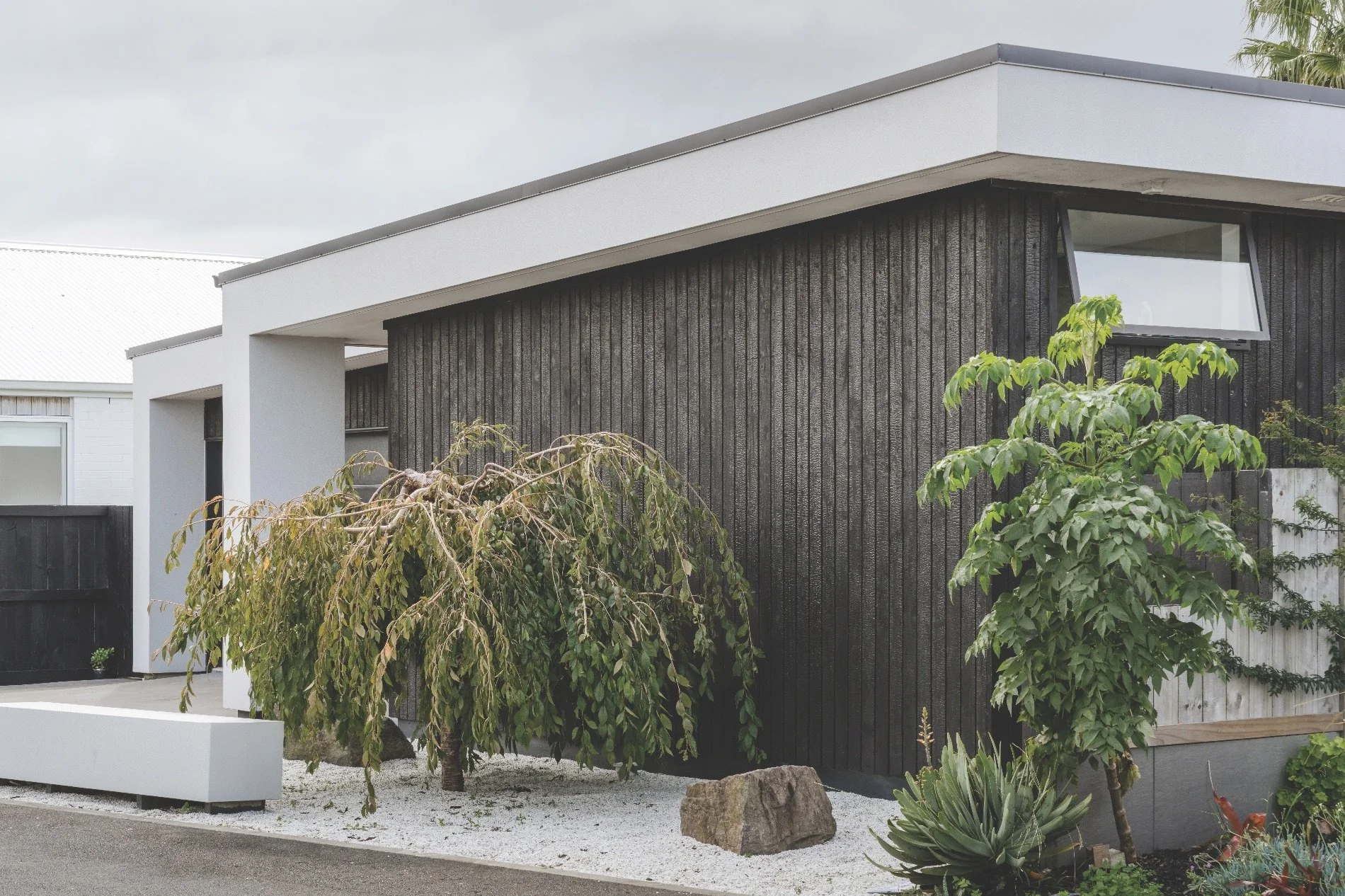
In Papamoa, the Greenhills have done exactly that. Inspired by years of travel in Japan, they set out to create a home that reflected the visual restraint of Japanese architecture and the values that sit beneath it – simplicity, stewardship, calm and respect for natural materials. The result is a home that feels composed and deeply considered. Every element contributes to a broader architectural language, instead of competing for attention.
At the centre of that expression is sugi in a yakisugi finish – also known as charred Japanese cedar.
Used externally, the timber gives the home a richness and quiet confidence that feels both contemporary and timeless. Its texture responds beautifully to light, bringing movement and depth across the facade. Yet its appeal is not simply aesthetic. Sugi by Pentarch is not just a product choice. In the right home, it becomes part of something larger – a design philosophy centred on permanence and thoughtful restraint. That makes it especially relevant in the context of sustainability.
For premium homeowners, architects and designers, the challenge is not only to choose materials with a responsible story, but also to ensure they continue to perform and feel rewarding over time. Sugi answers that brief with unusual clarity. It is durable, low-maintenance and visually enduring – a material that resists the short life cycle of trends and instead grows more assured with age.
That sense of longevity is central to the Greenhills’ home. What they have created is more than a beautiful house. It is a sanctuary of sorts, shaped by travel, by values, and by a desire to build something that will still feel relevant many years from now. The home does not imitate Japan, but draws meaningfully from its design philosophy, interpreting those principles for contemporary New Zealand living.
In a market increasingly drawn to products with both aesthetic integrity and practical longevity, that is a compelling proposition. And perhaps that is the most sustainable outcome of all.