Rise of the retreat
Duncan Barron, associate at Sheppard & Rout Architects in Christchurch Ōtautahi, offers insights into the growing popularity of wellness spaces.
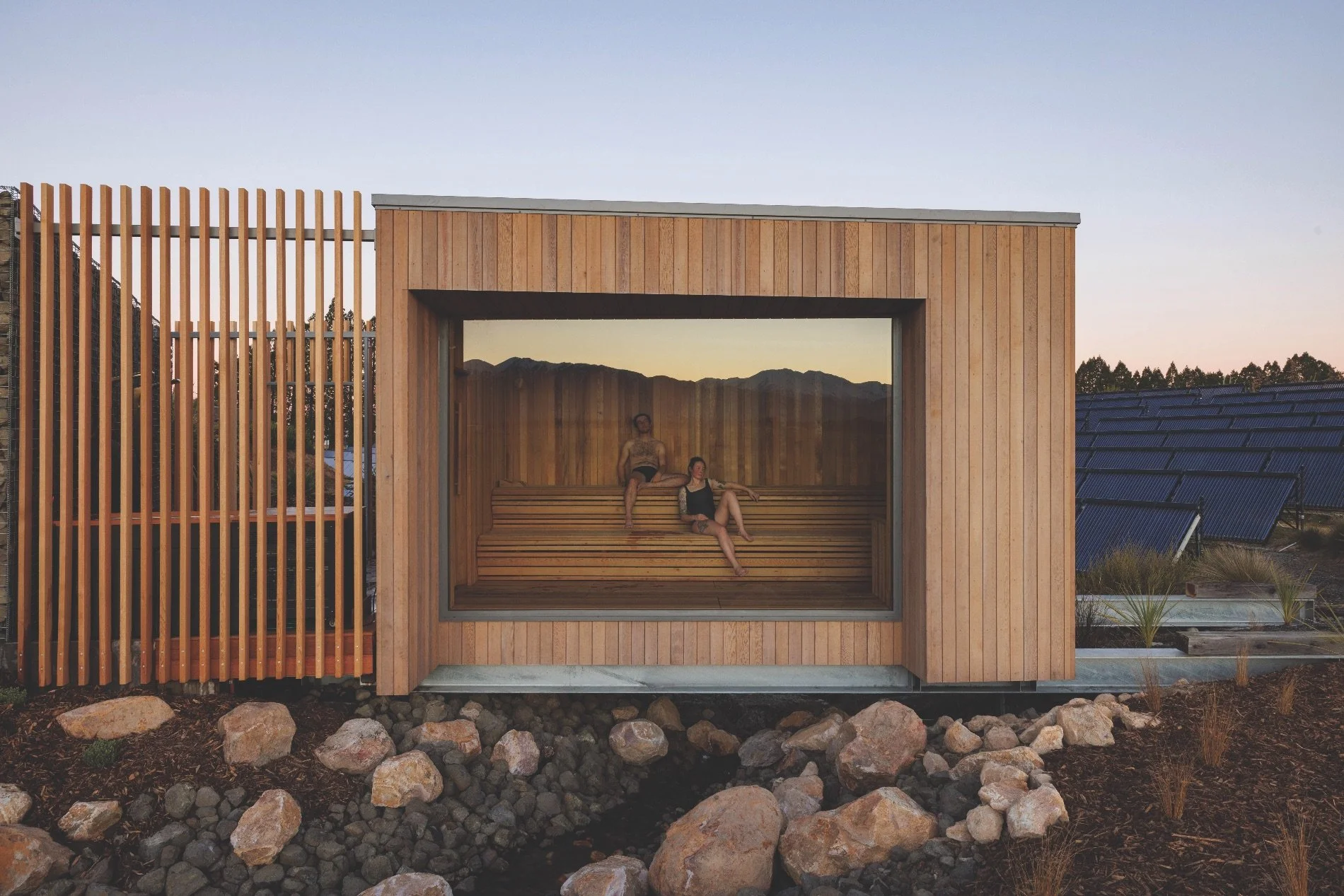
Opuke Sauna. Photography Hazel Redmond
An interesting statistic caught my attention a little while ago: the sauna-to-population ratio in Finland is approximately 1:2. Meaning, there are roughly 3 to 3.3 million saunas for the population of 5.5 to 5.6 million, and thereby enough capacity to fit the entire population into a sauna simultaneously. It is no big surprise, though, that saunas are popular in Scandinavia due to the colder climate and longer winter hours, but what is surprising is how low this ratio of saunas per capita is elsewhere around the world.
In New Zealand, however, there has been an emergence and adoption of urban, coastal, public and private installations. We have all seen the standalone saunas doing the social media rounds, whether in public coastal settings or in private, serene settings. There are good arguments for this: the known health benefits of saunas for longevity, immunity and the mind are among many.
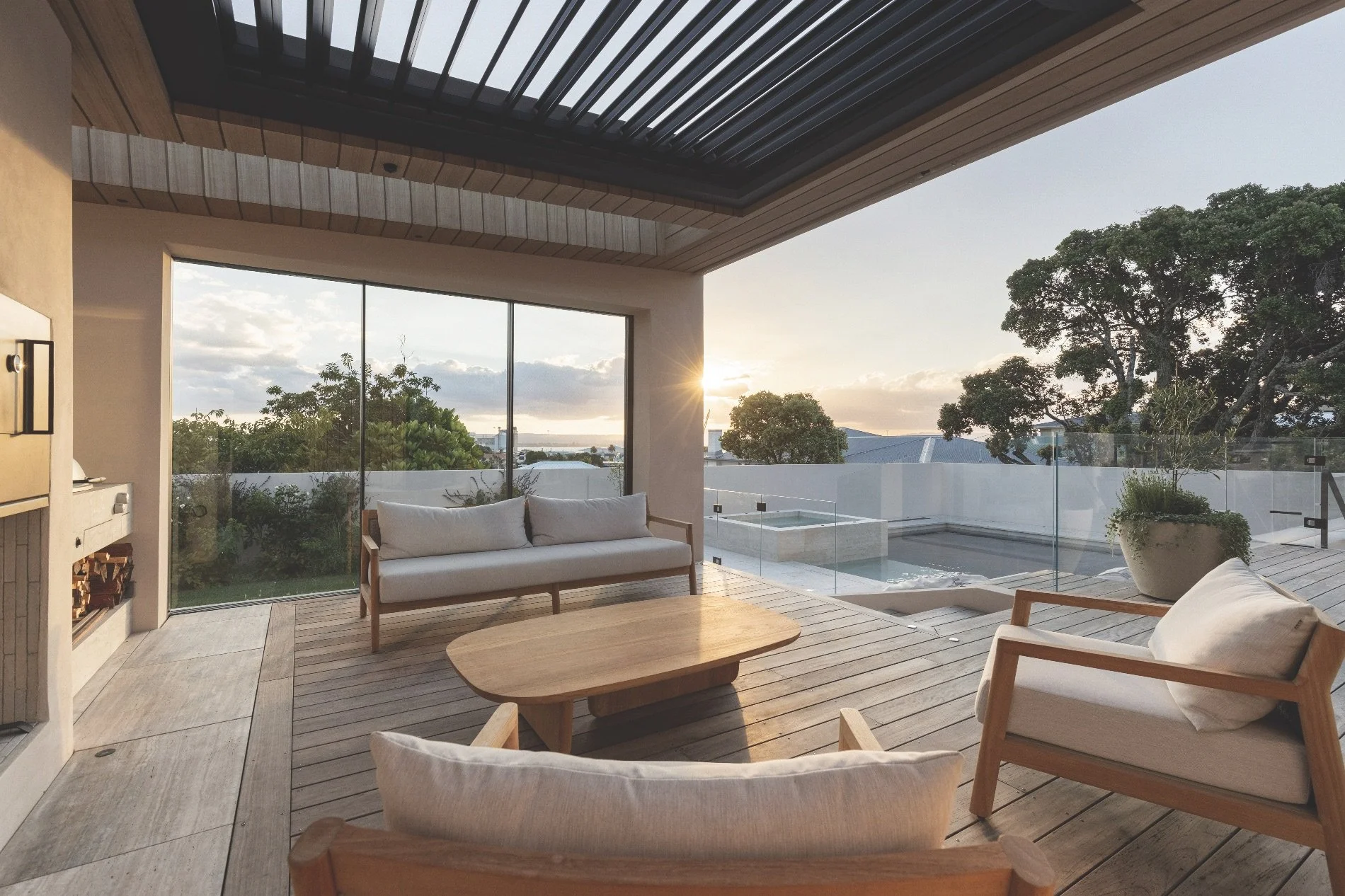
It doesn’t stop at just a sauna; a variety of wellness-focused spaces and activities are becoming increasingly prevalent inside the home. These can include spa and steam rooms, cold plunge and swimming pools, home gyms or wellness spaces for yoga or contemplation. Equally as important as the use of these spaces is the craft and execution that shape how they make you feel.
As architects, we at Sheppard & Rout Architects find ourselves with the opportunity to embrace and integrate this into many projects for our clients. Materiality, lightness or darkness, orientation and composition all play a big role in this. There are also biophilic principles of incorporating nature and natural elements into and around the home to serve the innate need to connect with nature. It is truly remarkable how a combination of these can be used to form a sense of calm and serenity in spaces for people to find sanctuary in their own home.
Perhaps one factor driving the adoption and integration of wellness spaces within the home is the fast pace of many people’s lives and the rapidly changing world around them. Whilst this seemingly uncontrollable change swirls around, maybe there’s something that won’t change: realising that as humans with a pulse, we need to take a step back and find grounding and disconnect. Perhaps this is why, if we can and are opportunistic to do so, we find true value in forming spaces that allow for prioritising the mind and a sense of calm.