Enjoying imperfection
When it comes to his own garden, Tony Milne of Rough Milne Mitchell Landscape Architects embraces a wabi-sabi mindset.
As I write, the summer rain dances on the roof above, melodic and soothing. I look out to our vegetable garden, abundant with growth and rejoicing in the warmth and moisture it unexpectedly receives. I start to write about sculpture and art in the landscape, but then the rampant leader of one of the tomatoes catches my eye.
Seeding broccoli and lettuce, rocket too, reach skyward through the spring onions, potatoes, strawberries, tomatoes, rhubarb, spinach, lettuces not going to seed, mint, parsley, marigolds, yarrow, gaura, sage, nasturtium, daisies, penstemon, echinacea and other random flowers that I can’t identify. Two once-espaliered apple trees stand over the garden, one bent in half with the weight of fruit, the other upright, unencumbered. Oh, and weeds aplenty.
The garden seems to work, as does the thyme that spreads, claiming the terrace edge, in an imperfect way. It’s certainly no parterre of Versailles, I muse. But rather subconsciously I associate this pleasing misalliance of foliage, produce and colour with a text message I received a little while back from my colleague Nikki, extolling the virtues of wabi-sabi.
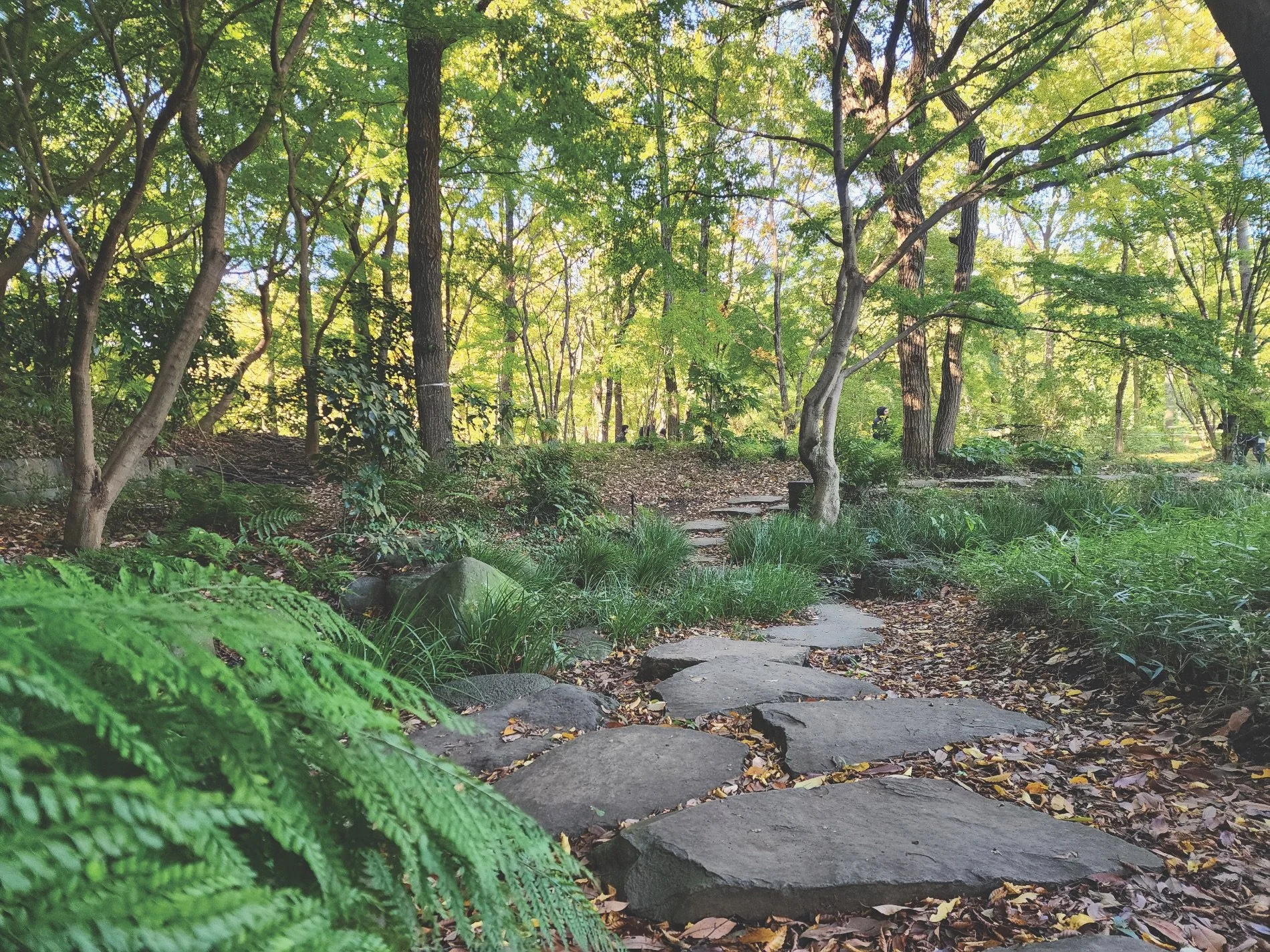
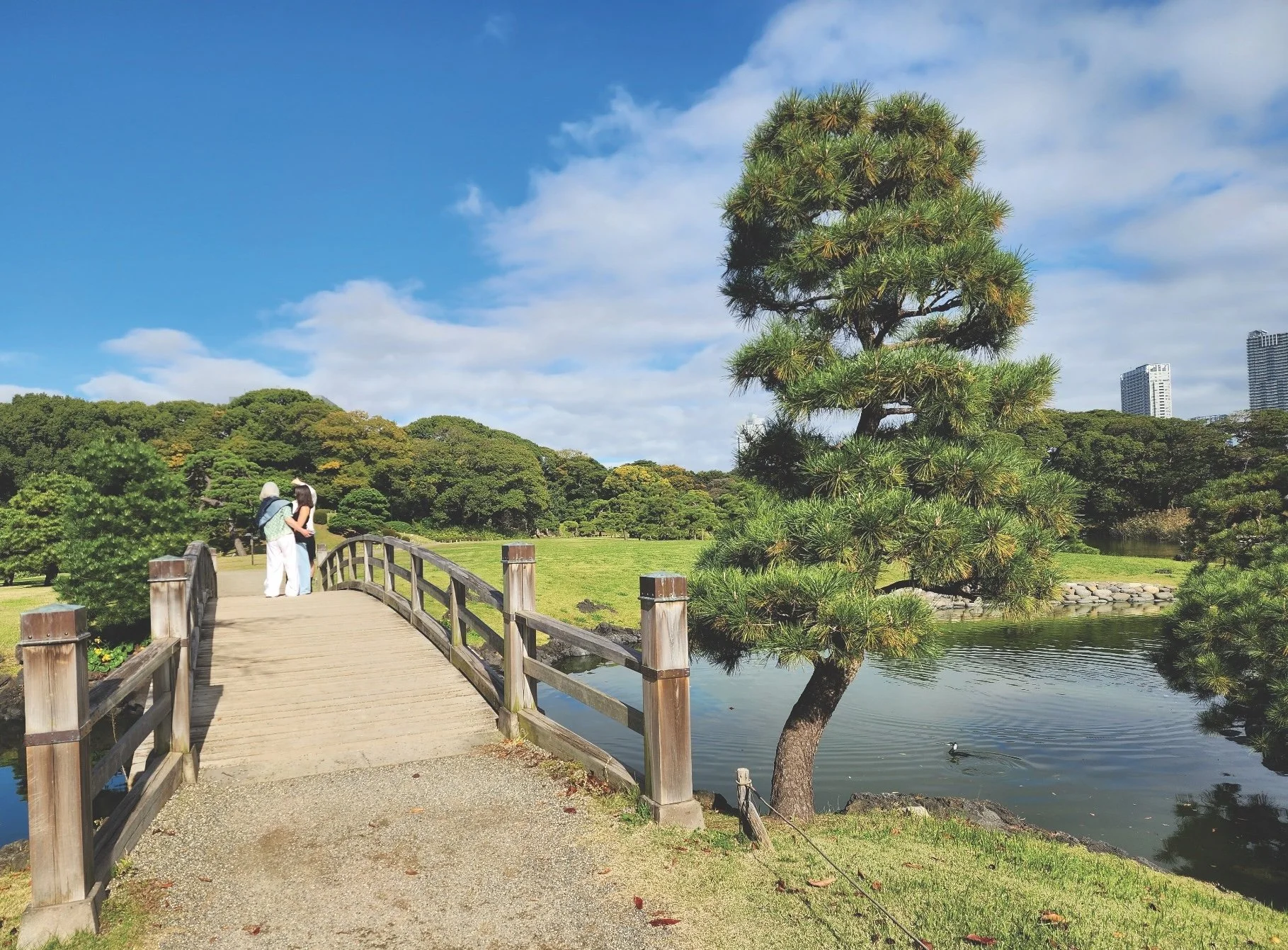
Wabi-sabi is a traditional Japanese worldview centred on finding beauty in imperfection, impermanence and simplicity. Distilled, wabi means understated, austere beauty. As Yoshida Kenkō, Japanese monk and poet, wrote some eight centuries ago:
“Are we to look at cherry blossoms only in full bloom, at the moon only when it is cloudless.... Branches about to blossom or gardens strewn with faded flowers are worthier of our admiration.”
While first explored in poetry, the idea of wabi was further developed in the art of tea and the context of Zen. I do like the way of tea: the elegant simplicity of the tea house and the utensils that contradict any notion that beauty must entail magnificence and opulence. Incorporating the equalising aesthetic of wabi into the tea ceremony is a wonderful story, and one I encourage you to learn.
The term sabi, through time, has acquired the meaning of something that has aged well, is rusty or has acquired a patina that makes it beautiful. At the heart of being sabi is the idea of authenticity. As described by Japanese author Jun'ichirō Tanizaki:
”We do not dislike everything that shines, but we do prefer a pensive lustre to a shallow brilliance, a murky light that, whether in a stone or artefact, bespeaks a sheen of antiquity… We love things that bear the marks of grime, soot and weather, and we love colours and the sheen that call to mind the past that made them.”
The evocative simplicity and emptiness of an alcove in a tea house is antithetical to the riot of our vegetable garden, I am aware. Its imperfectness is the delight. I wonder if I can get one more year out of my twisted, asymmetrical bamboo tomato stakes and how much longer I can ignore the family’s protestations over my predilection for the weathered patina of the timber within our garden – it connects us to our past, I suggest.