Cabin cool
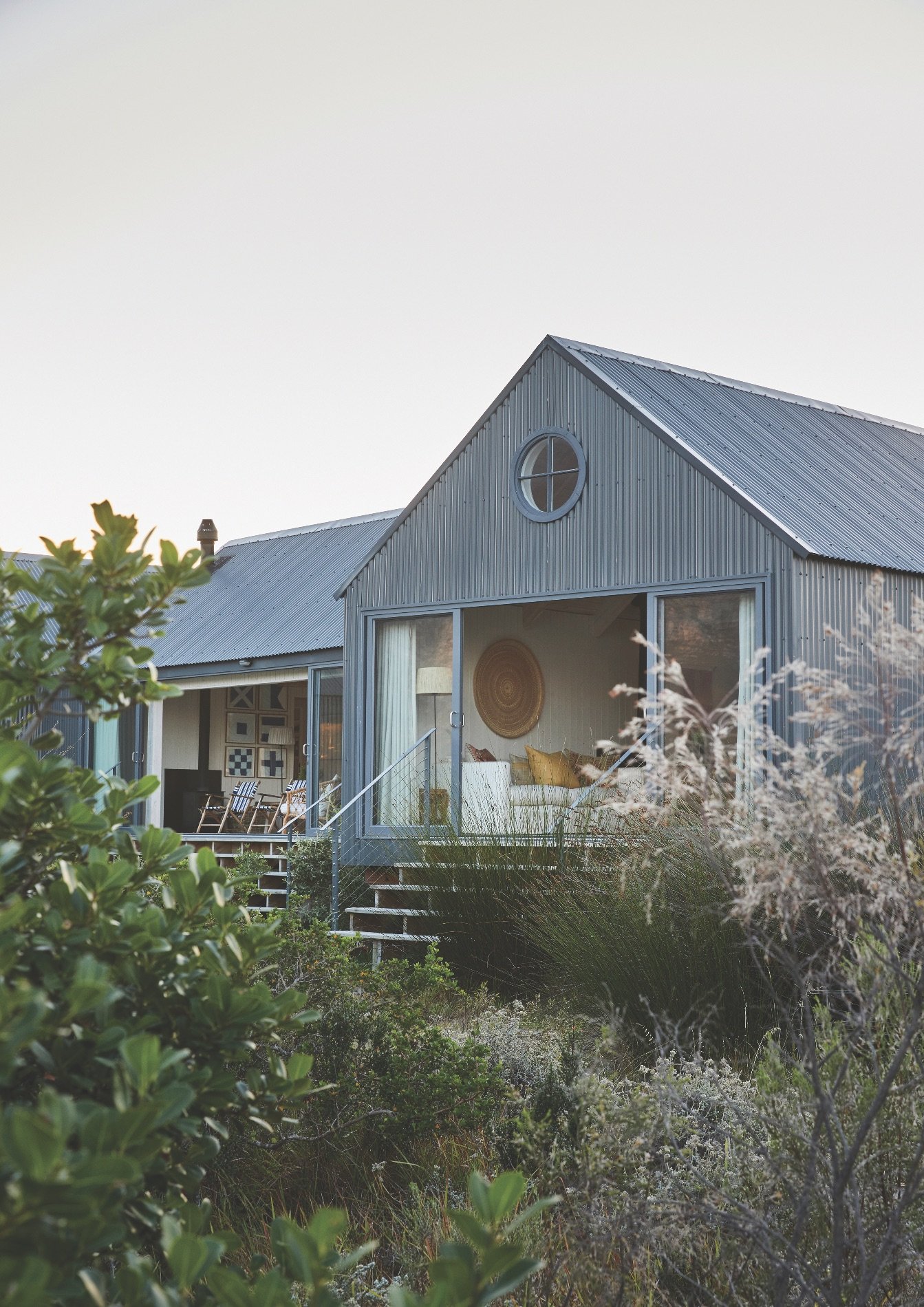
Situated between a picturesque estuary and the sea, this family holiday cottage combines a crisp update on cabin design with cosy interiors inspired by old-fashioned boathouse style.
WORDS Robyn Alexander PHOTOGRAPHY Warren Heath/ Bureaux PRODUCTION Sven Alberding
Eight years ago, Jo Sinfield and his wife Sarah spent a weekend at a lodge on the Overberg coast, about two hours from Cape Town. The couple are inveterate and professional travellers – Sarah is a bespoke tour operator and Jo is a co-founder of Explorers Club, a collective of accommodation options and creators of off-the-map expeditions in South Africa, Zimbabwe and Kenya – so this was an ordinary part of their routine. But on this occasion, there was an unexpected bonus to the visit: it opened Jo’s eyes to the utterly unique property next door.
“I gazed at the ancient indigenous milkwood trees, the open water of the river and lagoon, and the Maanschynkop mountains rising up beyond,” says Jo. “And I thought, why hadn’t I known about this place before?” The landscape is remarkably beautiful, with a long stretch of wild beach on one side, a lagoon in the centre, and the blue-grey mountains rising up across the water. It feels untamed and untouched, yet also like a natural, safe haven. Unsurprisingly, Jo rapidly formed the idea of creating a select group of family holiday cabins here, and he enlisted the assistance of fellow conservationist and destination developer Bas Hochstenbach as planning commenced on what has now become Coot Club.
From the start, they were determined that the environment should shine – and so a key priority is taking care of the 464 hectares of land that make up the property. Situated within the Walker Bay Fynbos Conservancy, and having never been commercially farmed, Coot Club was given an ornithological and botanical biodiversity assessment in 2021 by Birdlife South Africa, who not only recorded a remarkable 230 different species of birds here, but also recommended that the peninsula be accorded the highest possible nature-protection status.
As a result of the need to ensure that environmental impact assessments were completed and complied with – as well as having to satisfy the stringent requirements of various heritage regulators – the process of designing and building here required great care and took a considerable amount of time. A detailed awareness of the issues involved with building close to bodies of water and the coastline became part of the entire team’s consciousness for the design and construction processes.
Jo turned to Cape Town-based architects Jed Kritzinger and Julia Abell of Kritzinger Architects as design professionals ideally placed to retain that focus on biodiversity and create buildings that are second
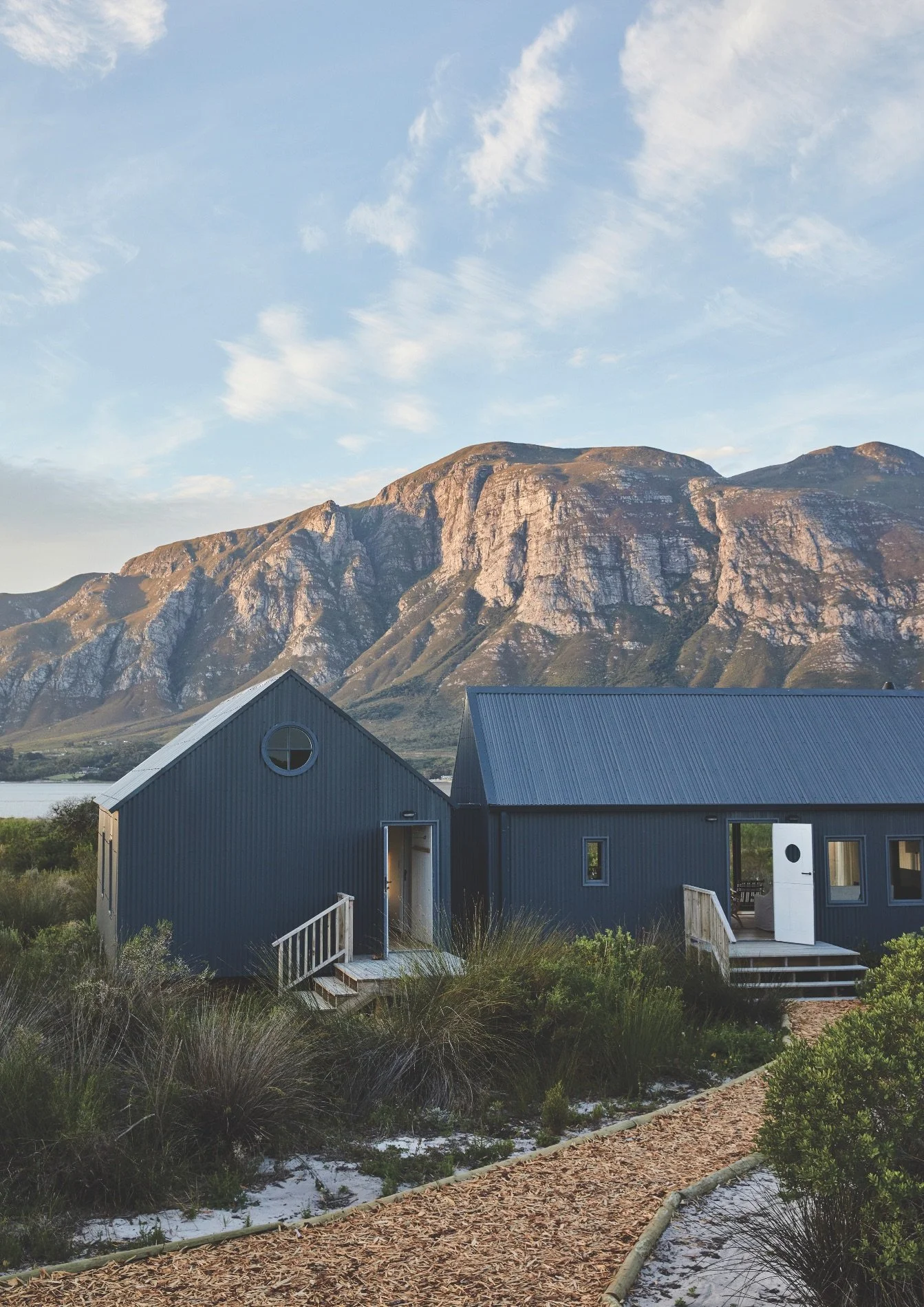
to the landscape rather than standing out, says Jo. Jed, too, was immediately struck by the pristine condition of the vegetation and the dramatic views of the mountain range that the boat houses would be facing, he says, and saw the deep, steely-grey colour tones and scale of the mountains as key sources of visual inspiration.
The design Jed suggested was based on the concept of an old corrugated-iron boathouse that structurally hovers above the terrain rather than imposing itself on it – a building that, as Jo puts it, “floats in nature on stilts”. This idea was well received by both town planning and heritage authorities: “A complementary addition to the landscape, with the dark grey exterior allowing the boathouses to discreetly settle into the landscape,” says Jed.
Raising the building platform above the ground also minimises damage to the surrounding vegetation, meaning that the new structures touch the earth lightly, he adds. “The overall weight of the building is minimised by using a lightweight timber structure, clad with traditional Victorian-profile corrugated iron.”
Thus, the full impact of the construction process is more eco-friendly, an asset that is augmented by
the buildings’ placement, which follows the natural contours of the land. “This offered flexibility during construction as it allowed each boathouse to be set out independently according to the contours,” explains Jed, “while protecting the milkwoods and morphing the building form into the landscape.”
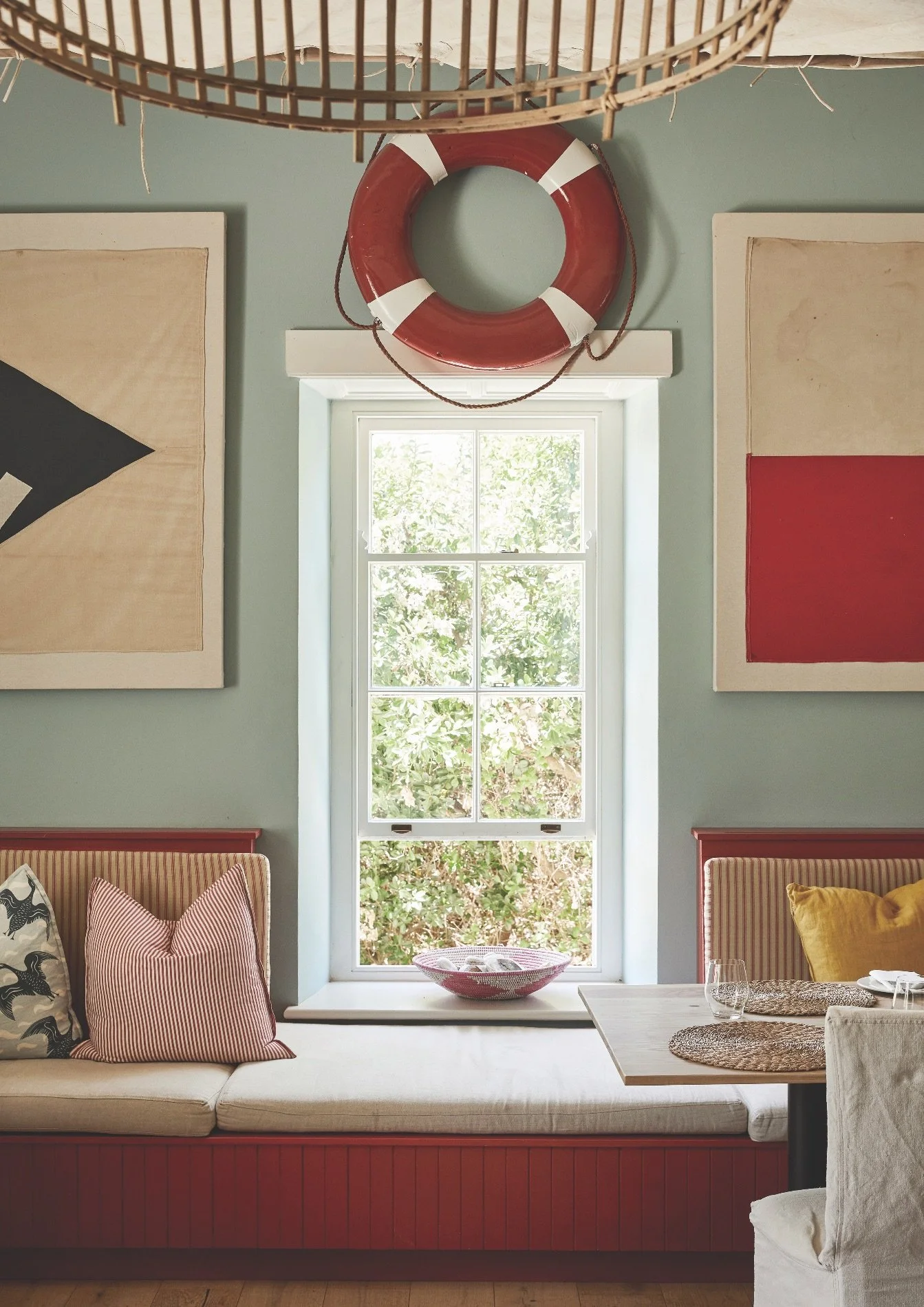
The nautical theme suggested by the architectural form of the cabins is further enhanced by the use of timber decking and wood-panelled interiors, as well as design details such as porthole windows, all of which are reminiscent of traditional boat-building techniques, as Jed puts it. A boathouse aesthetic is also key to the interior design, for which Jo envisioned something “fun, fresh and different”, he says, which would “bring the nautical feel inside via sailing memorabilia, in a way that complements the natural environment”.
To realise this aim, he enlisted the expertise of Cape Town interior designer Dominic Touwen, who worked with fellow designer Camilla Fraser on the project.
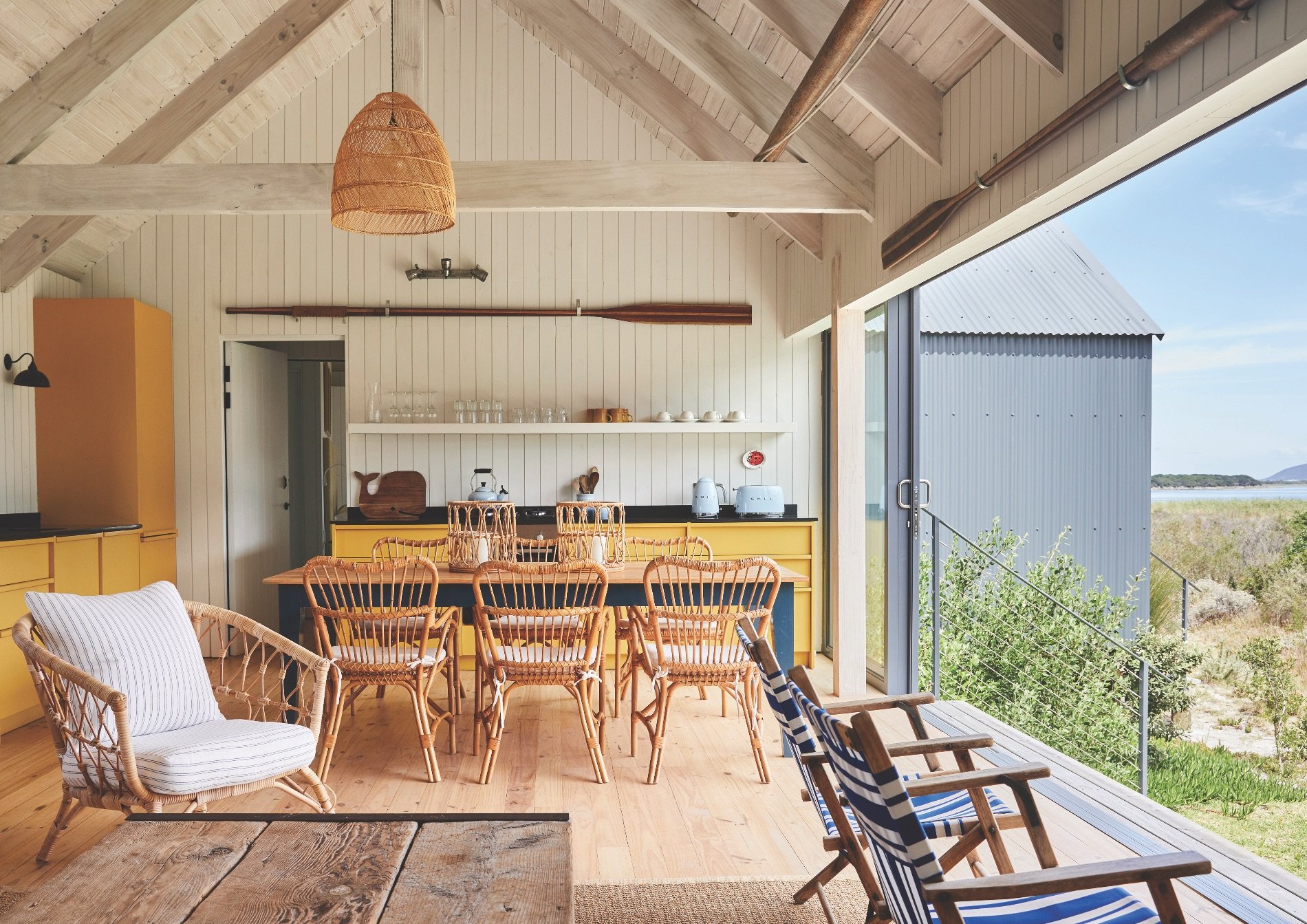
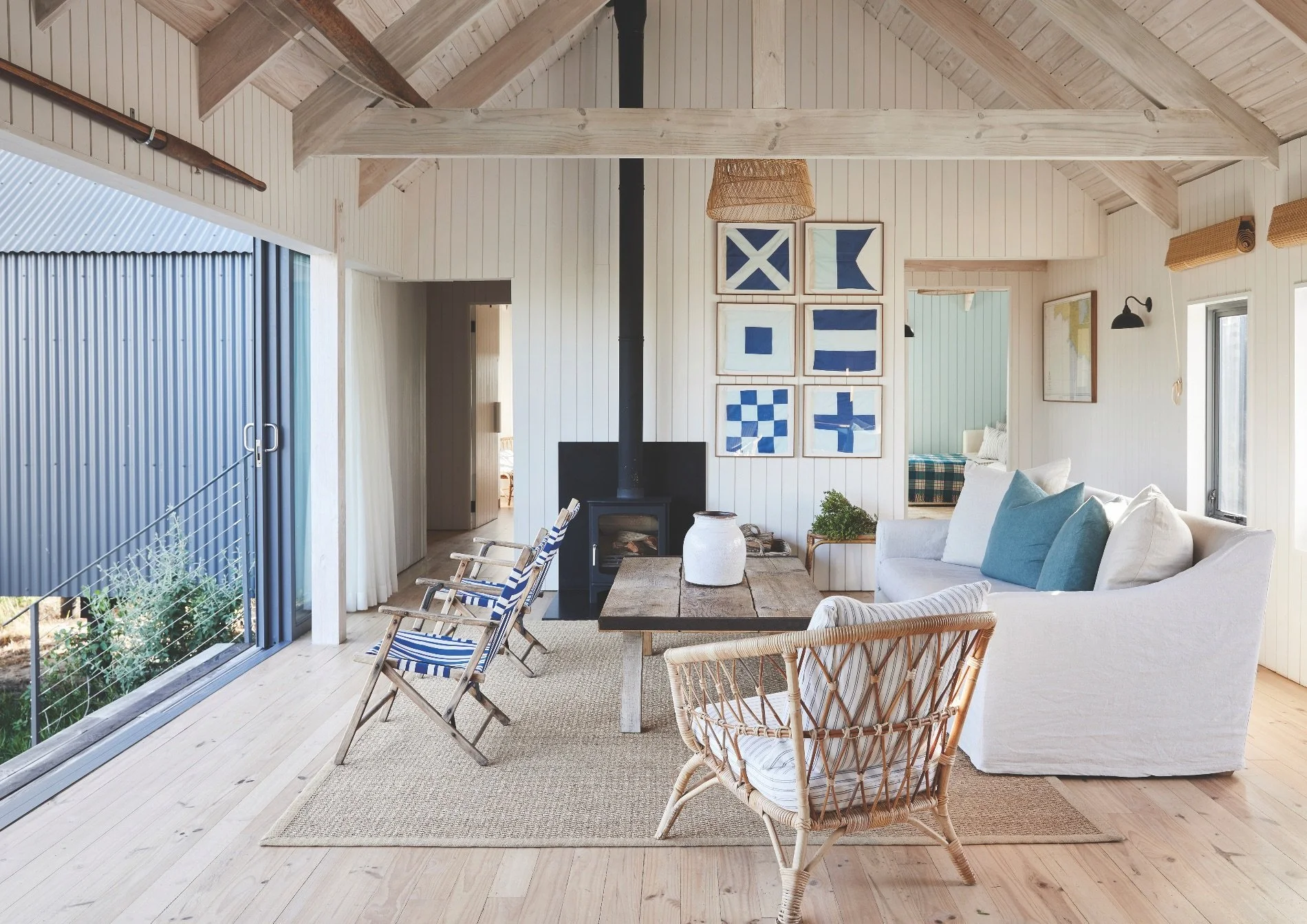
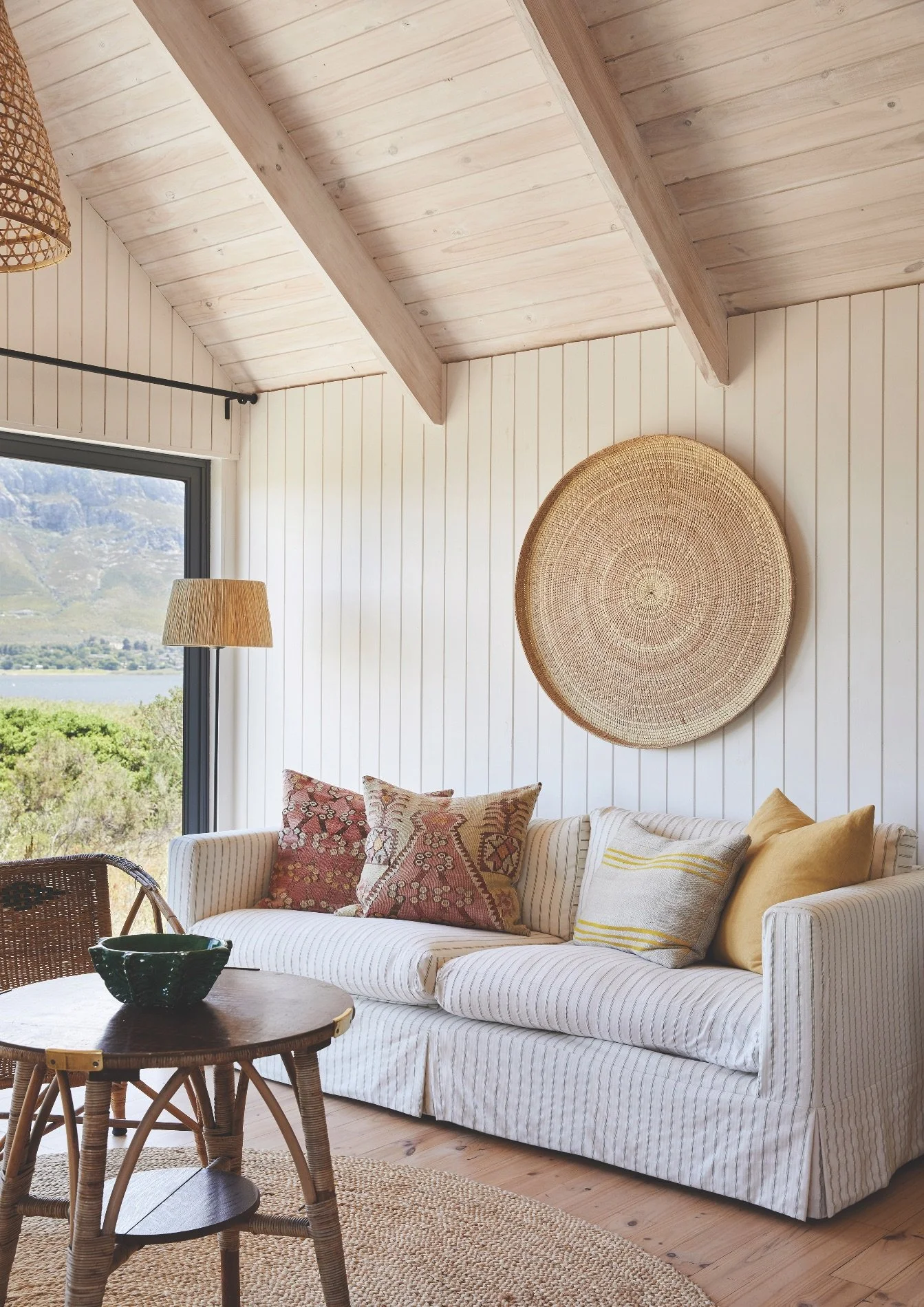
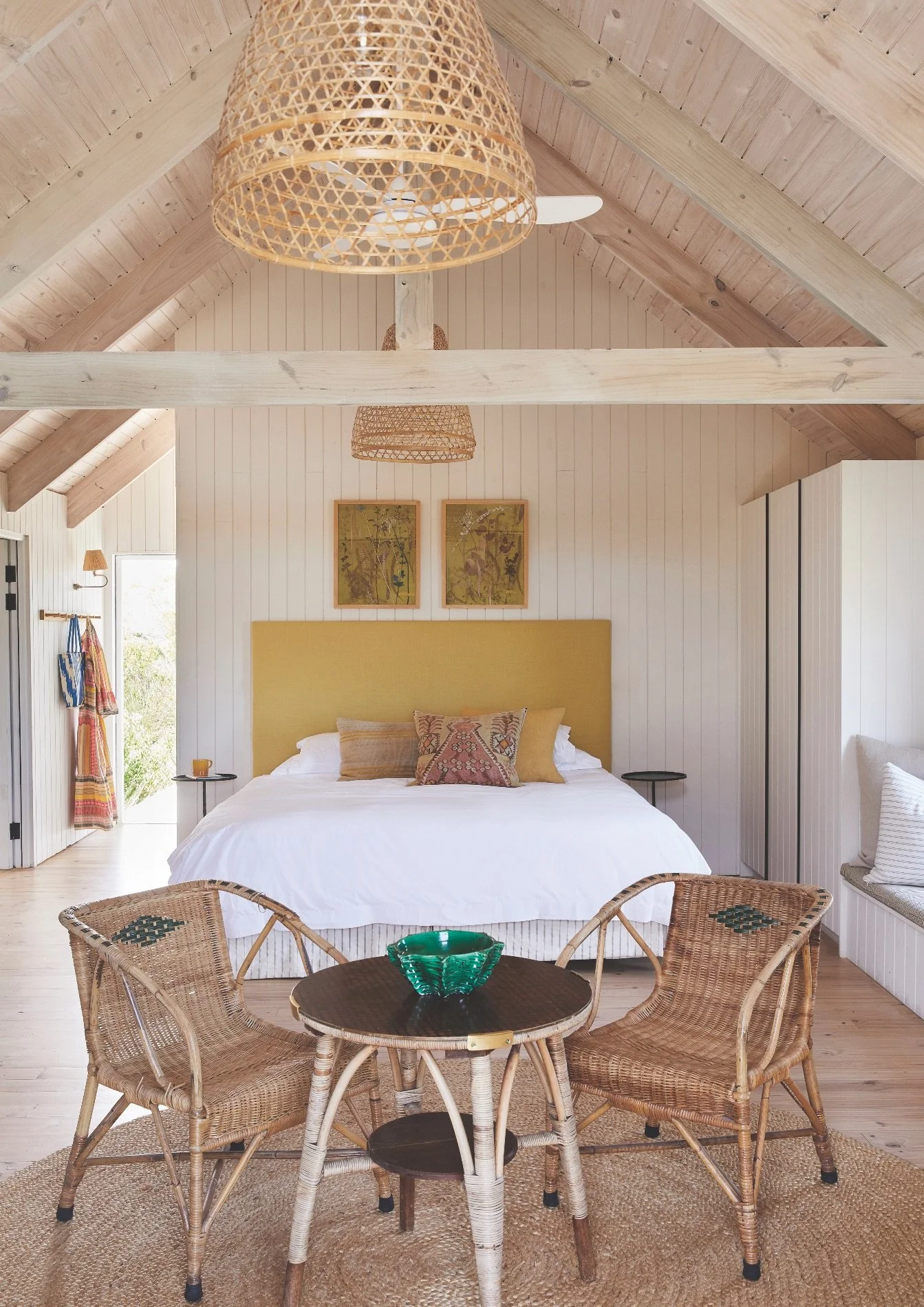
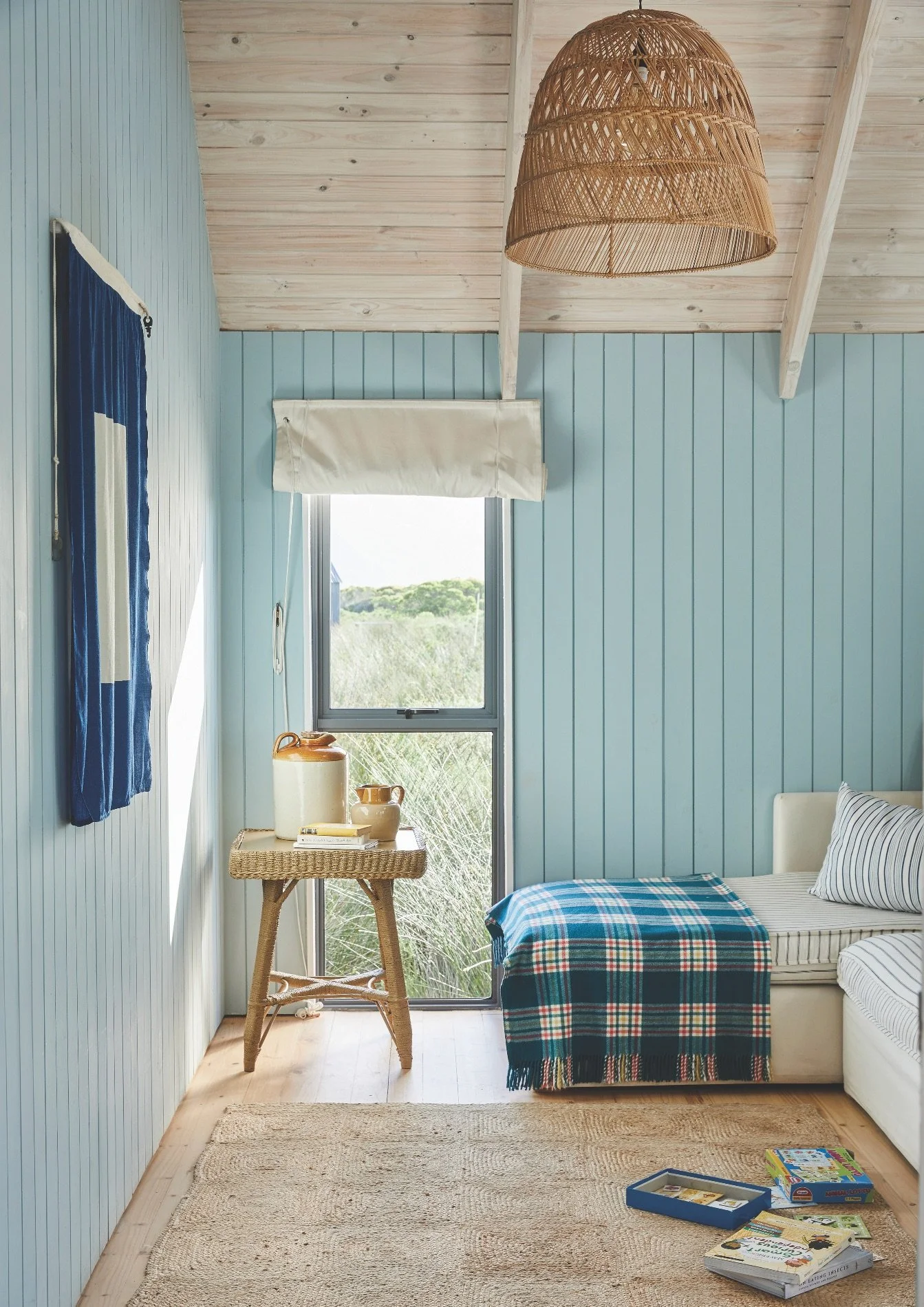
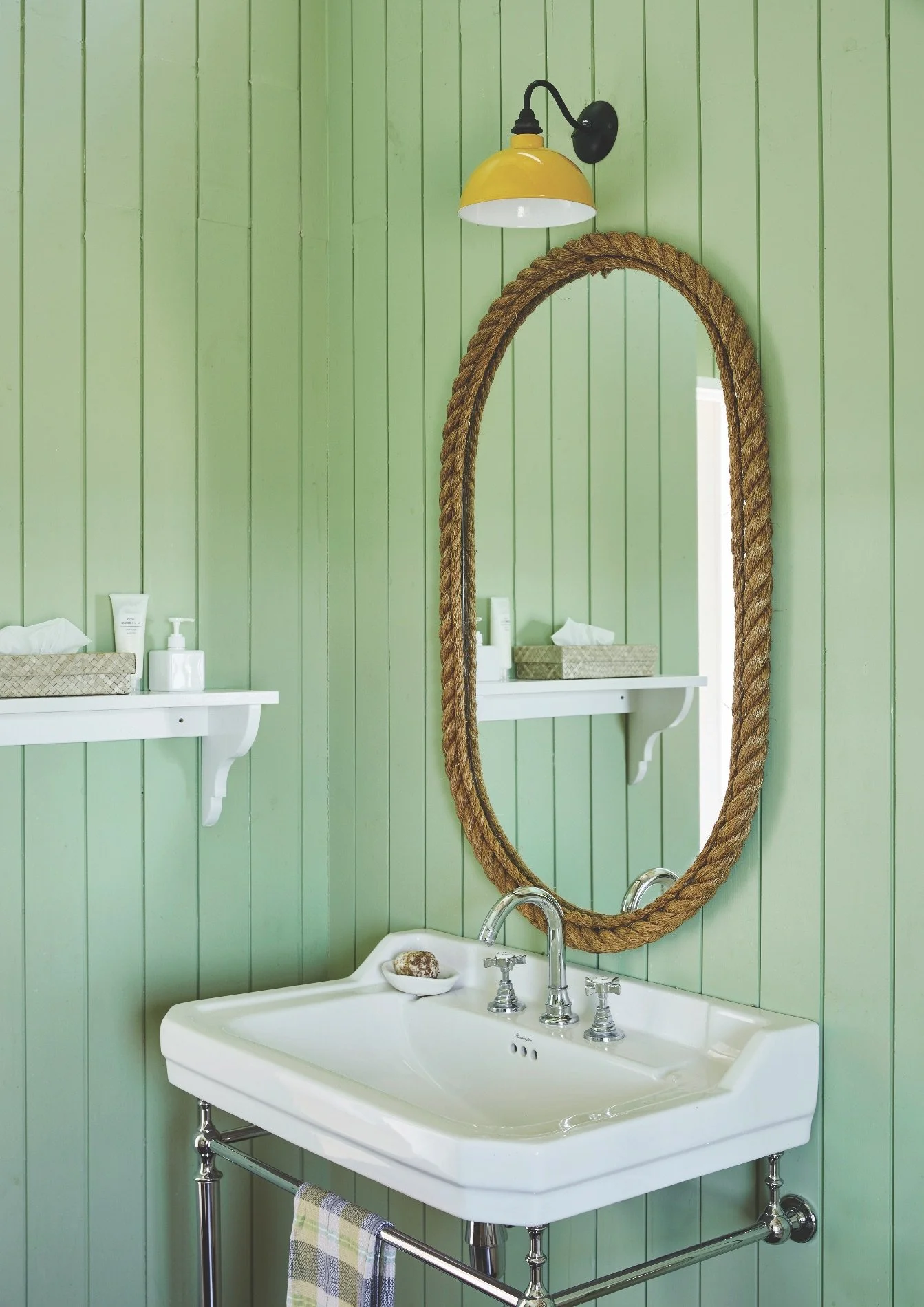
Says Dominic, “The clients asked us to create weekend cottages that would take them back to their childhood – a retro and very relaxed experience of exploring the lagoon and messing about in boats. The interiors had to be hard-wearing yet comfortable, and definitely not pretentious.” Set against the painted timber-lined interiors of the cabins and amplified by the open eaves and plentiful natural light, the resulting interior schemes nod to sailing nostalgia while also having a simple, contemporary feel.
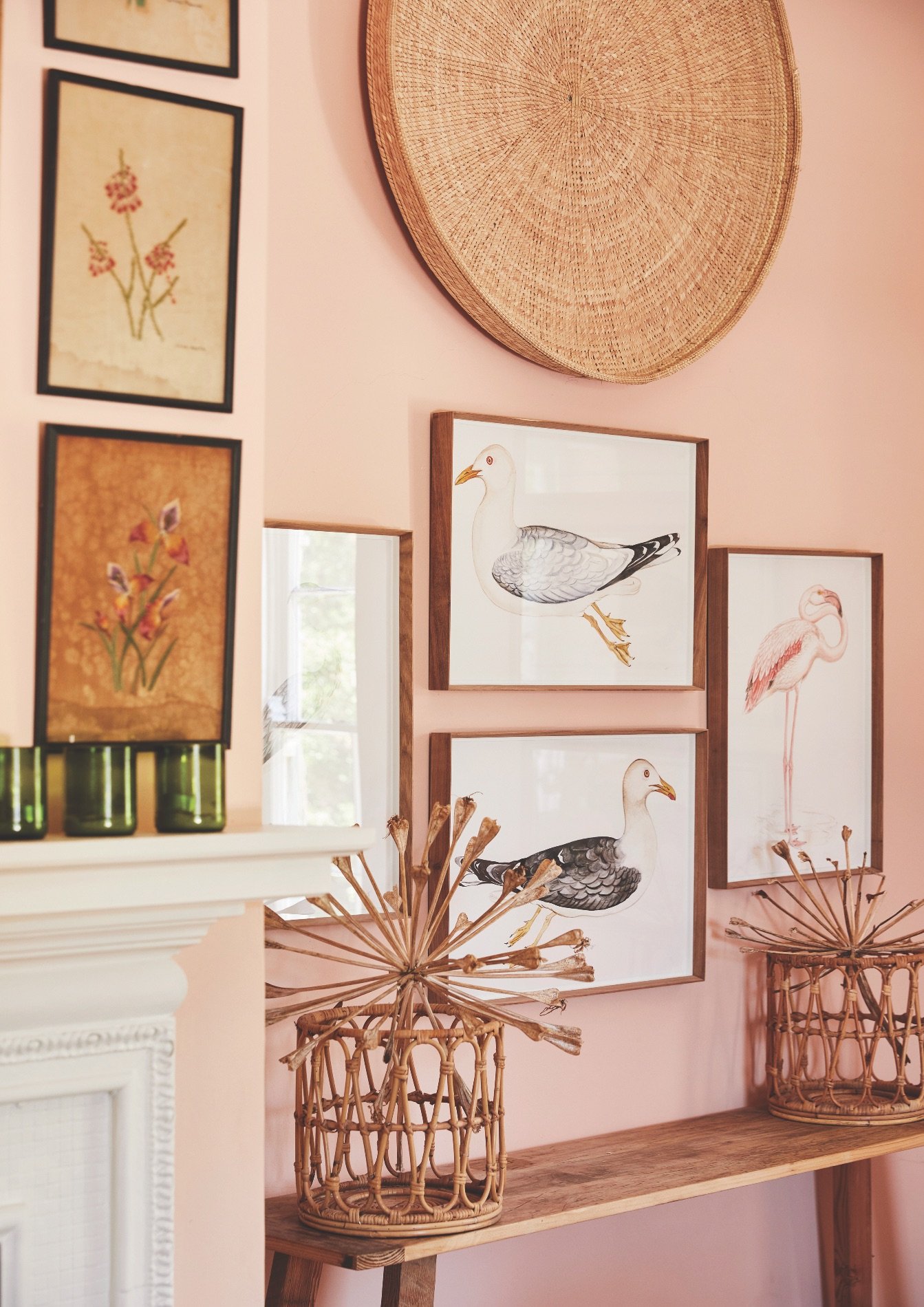
Fabrics include natural linens and old-school ticking stripes, which are complemented by rustic wooden furniture pieces and lots of comfortable seating options such as large sofas and vintage cane armchairs. The finer details – “splashes of primary colours, nautical prints, paddles, oars, old masts, sails and flags” – are deployed with judicious verve, and were picked up in junk shops and at sales where old sailing paraphernalia can be found, says Dominic. It’s a charming decor scheme that meets the brief with casual aplomb.
Like everyone else who has contributed to the creation of Coot Club, Dominic clearly remembers the first time he viewed the property. “It was like déjà vu,” he says. “I realised that I had sailed across the lagoon from the yacht club when I was a child and explored the then- derelict old stone house here. So it’s a very sentimental project for me. It’s one of the most exceptional sites in the Cape, and it’s been a real privilege to be able to work here.”
In short, this holiday haven is a genuinely unique location, where a delightfully nostalgia-infused aesthetic combines with a viable vision for the preservation of the pristine environment far into the future. As Jo reiterates, the most important element of Coot Club (cootclub.com) is the way in which it facilitates a process of letting go for family and friends taking time out here. From waking to a symphony of birdsong to exploring the lagoon in a kayak, relishing a long beach walk and spending a sun-drenched afternoon playing boules, this place is all about complete, recuperative relaxation and finding ways to reconnect with the natural world.