Light hearted
Craig Burt of Parsonson Architects creates his own family home overlooking Wellington Harbour, with a sophisticated design that doesn’t take itself too seriously.
WORDS Cassie Doherty PHOTOGRAPHY Simon Devitt
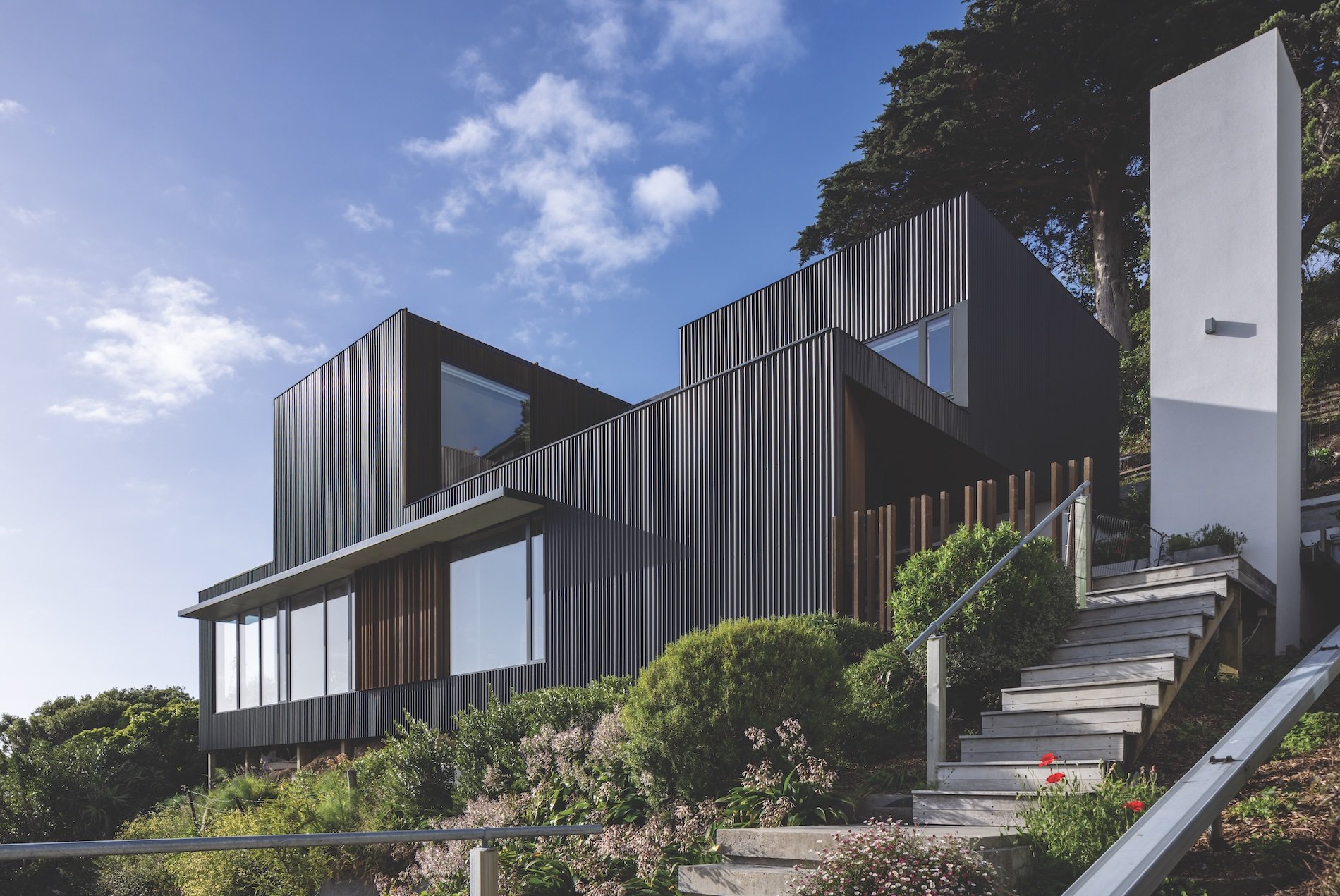
The first glimpse of the house on the northern slopes above Wellington harbour shows a bold architectural aesthetic. Designed by Craig Burt, director of Parsonson Architects, as his own home, it’s black, clean-lined and contemporary.
But look again and there are clues to the light-filled, relaxed and family-friendly interior – the hint of timber that softens the facade, and a touch of whimsy in the forms. “Broken up blocks,” Craig calls them, which give a subtle sense of a loosening of boundaries.
Craig and his wife Anganette Hall have owned this site for about 20 years. They liked the idea of finding a house with a large property to subdivide and build on, says Craig, so they kept their eyes open. “And this property came up. It’s 1200sqm with a transitional villa at the front of the site, and it was north-facing with harbour views, so it was appealing. The access isn’t great, but it’s Wellington, so everyone accepts that.”
The villa was rented out while the pair lived overseas until eventually they decided to carry out their long-held scheme. By now they’d started their family, so they shifted into the villa themselves to be on hand for the build, and got to planning. “That was really valuable in that it gave us time to get a lot more familiar with the site.”
That revealed several things. One, the villa was by then in need of an overhaul, so they renovated that. Further, the back of the site was seriously overgrown. “It was dense bush. So we used to sit up there under the macrocarpas, looking out through the bush to see the views and imagine what it would be like.”
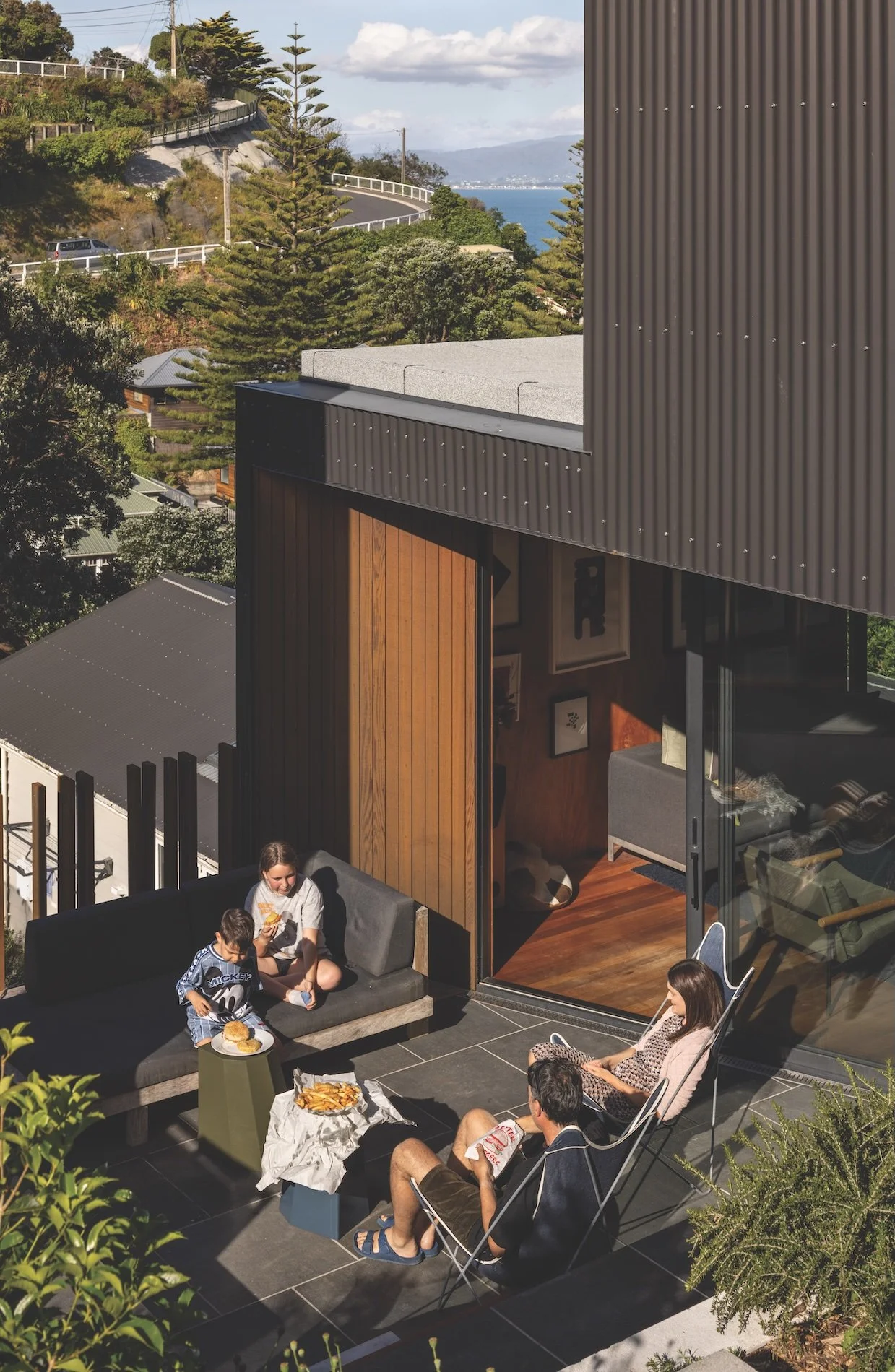
Every project has parameters that shape the design, and in this case it was the steep site, the north-facing aspect, views to the east and the macrocarpa trees. The new home stretches across the site from east to west, the kitchen capturing morning sun for breakfast and transitioning through the day to a courtyard on the western side.
The site for the new build is 30m up from the road, tucked behind the existing house and on quite an incline, dictating building methods and material choices. “The macrocarpas also started to inform the way the house should look. They have mass to them, they’re dark, they recede back into the hillside, so I didn’t want something that was big and bright.”
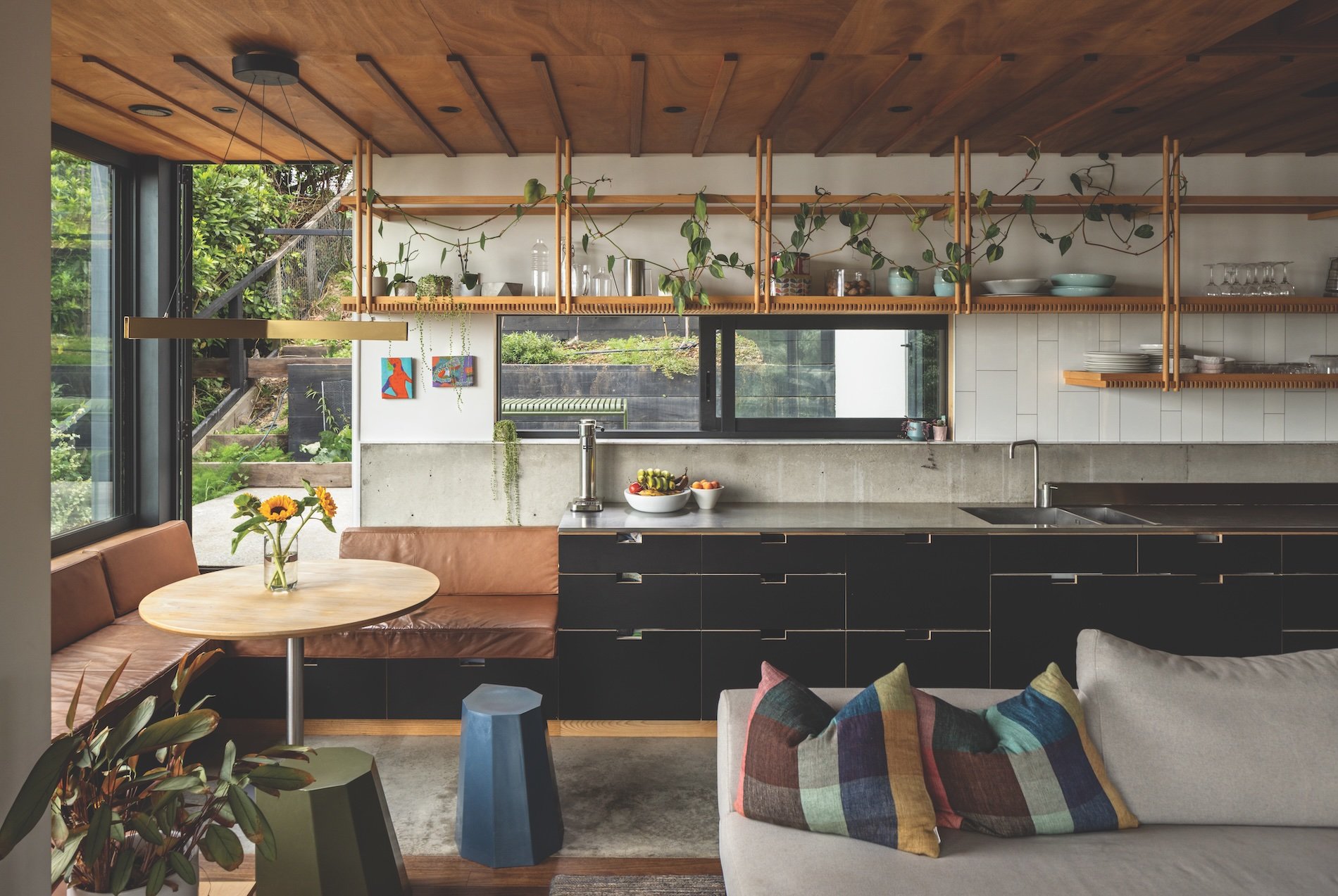
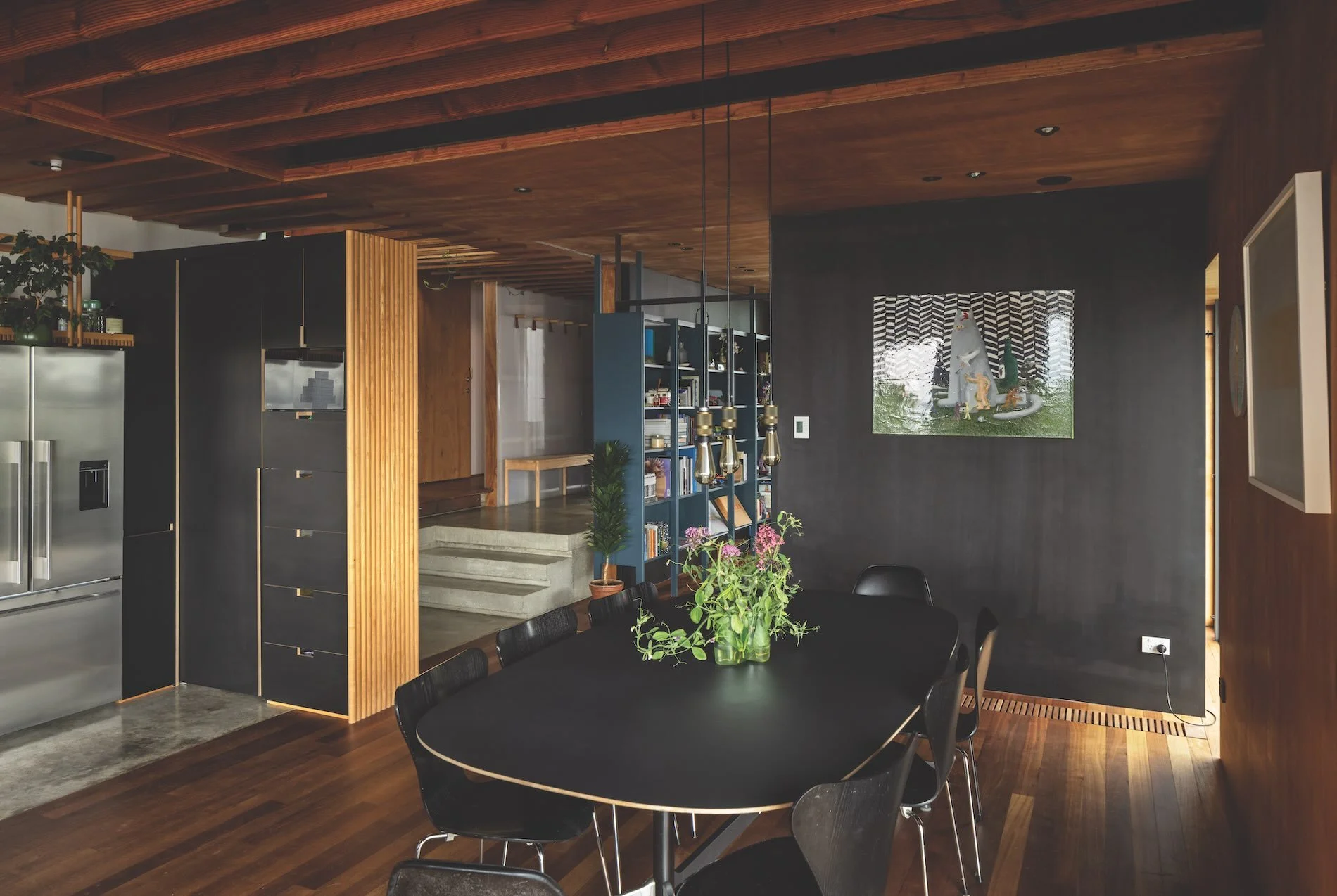
The kitchen is a perfect example of the design concept of this house, and the joinery here was pivotal. It was manufactured with precision and attention to detail by Prestige Joinery.
But macrocarpas also have a delicate nature to them, he explains. This led to the use of the corrugated steel exterior. The material is low-maintenance, cost-efficient, lightweight, robust and yet detailed in its texture. It has been used as a rain-screen, hiding the real work of weatherproofing underneath and removing the need for details such as flashings to distract from the clean lines.
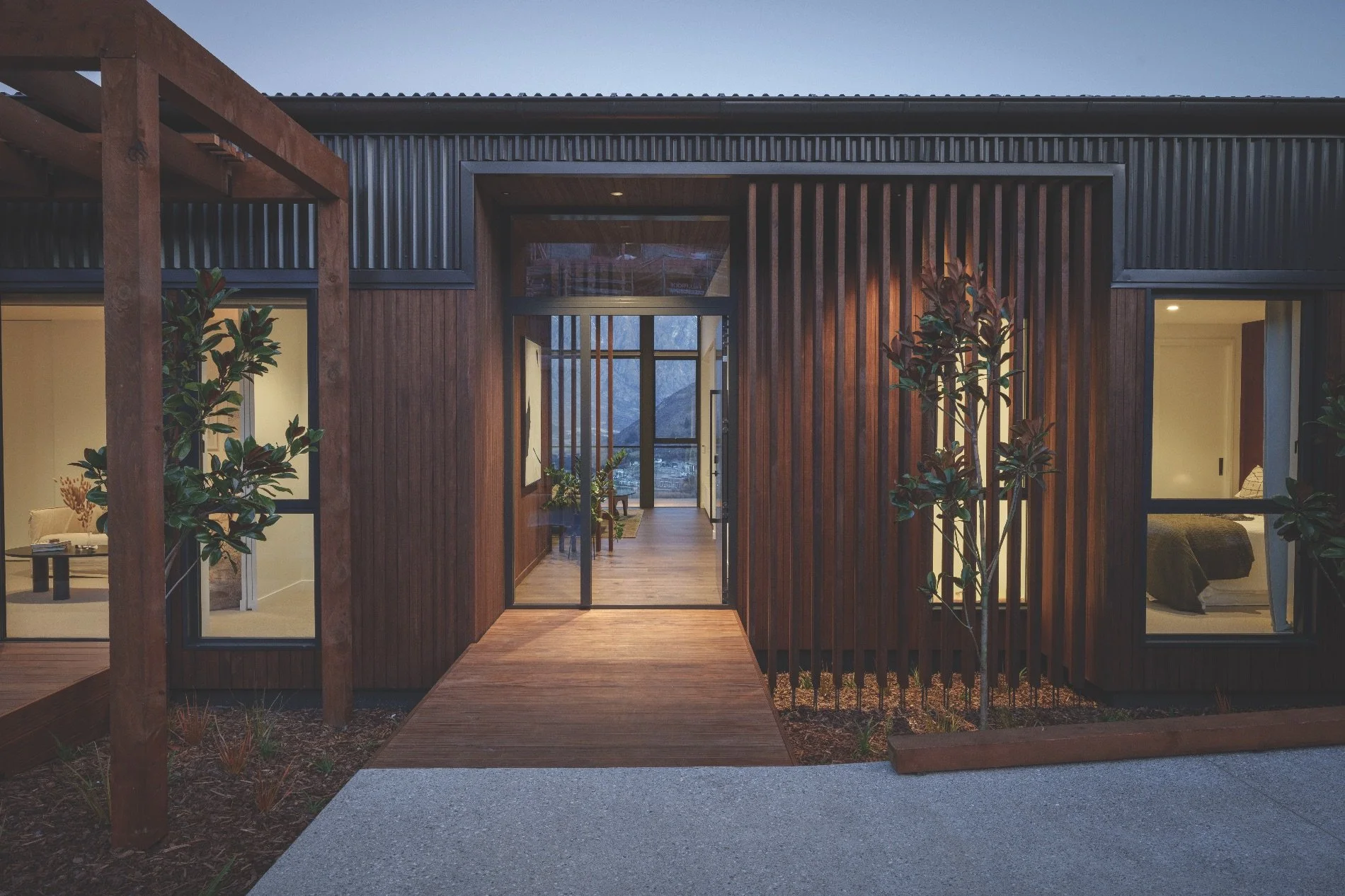
“The home is intentionally designed as a straightforward corrugated steel box, but where people approach or interact with it, the form opens up to expose timber details. Inside, the same idea flows through: the materials become more refined in the spaces and features you engage with directly.”
This approach is most evident in the kitchen, which runs the length of the back wall of the main area, connecting the dining and living. Heavier materials make up the home’s structure, including concrete slab, darker exposed joists and bold cabinet doors. Then, for finer joinery details, lighter finishes are used, such as in the delicate suspended open shelves that Craig calls “a beautiful object to give it all a lift”.
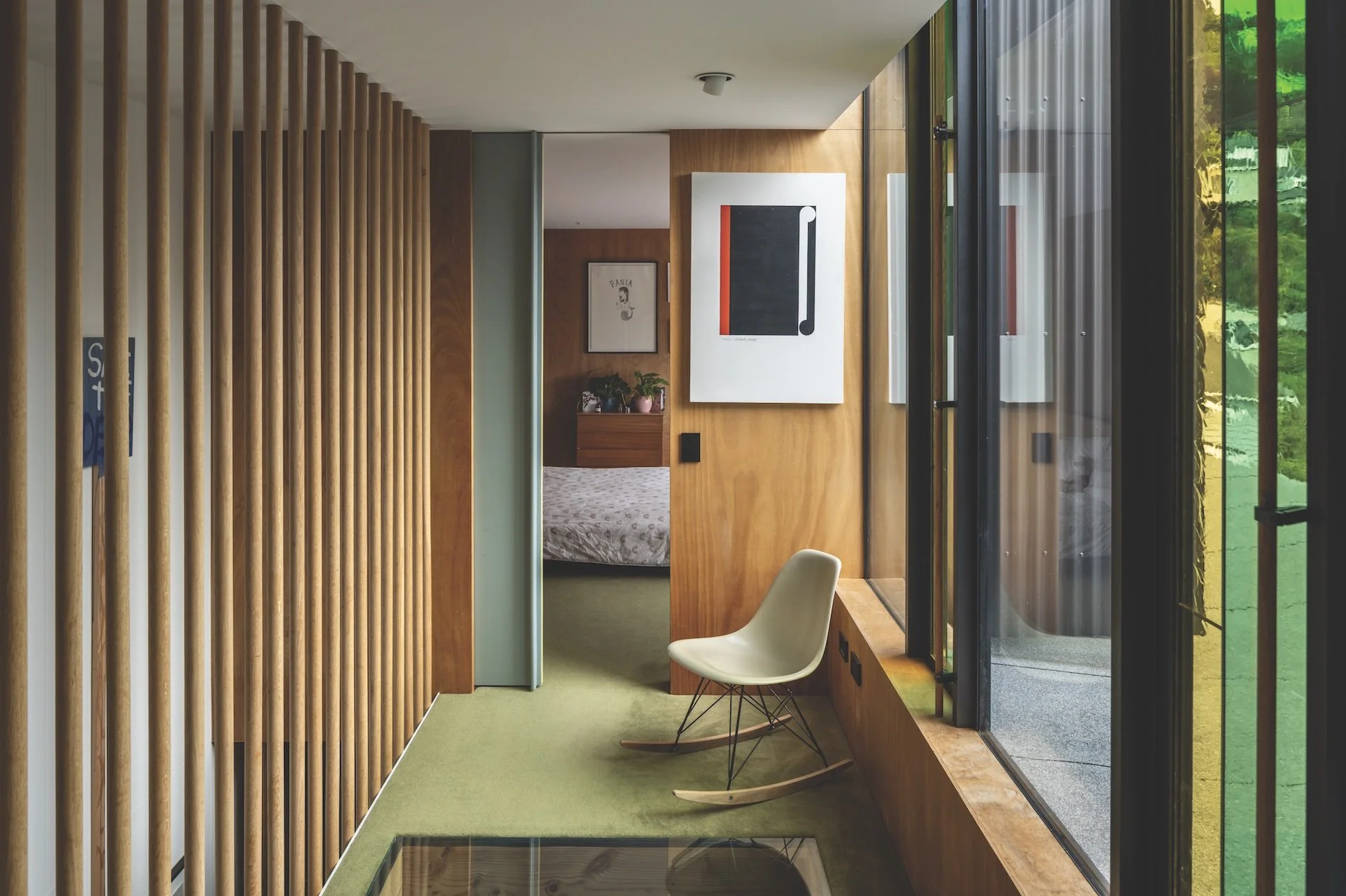
Dowelling on the pantry and an entry closet informs the baton detail on the kitchen ceiling, both to define the area in the open-plan space and because, Craig says, it felt like the right thing to do.
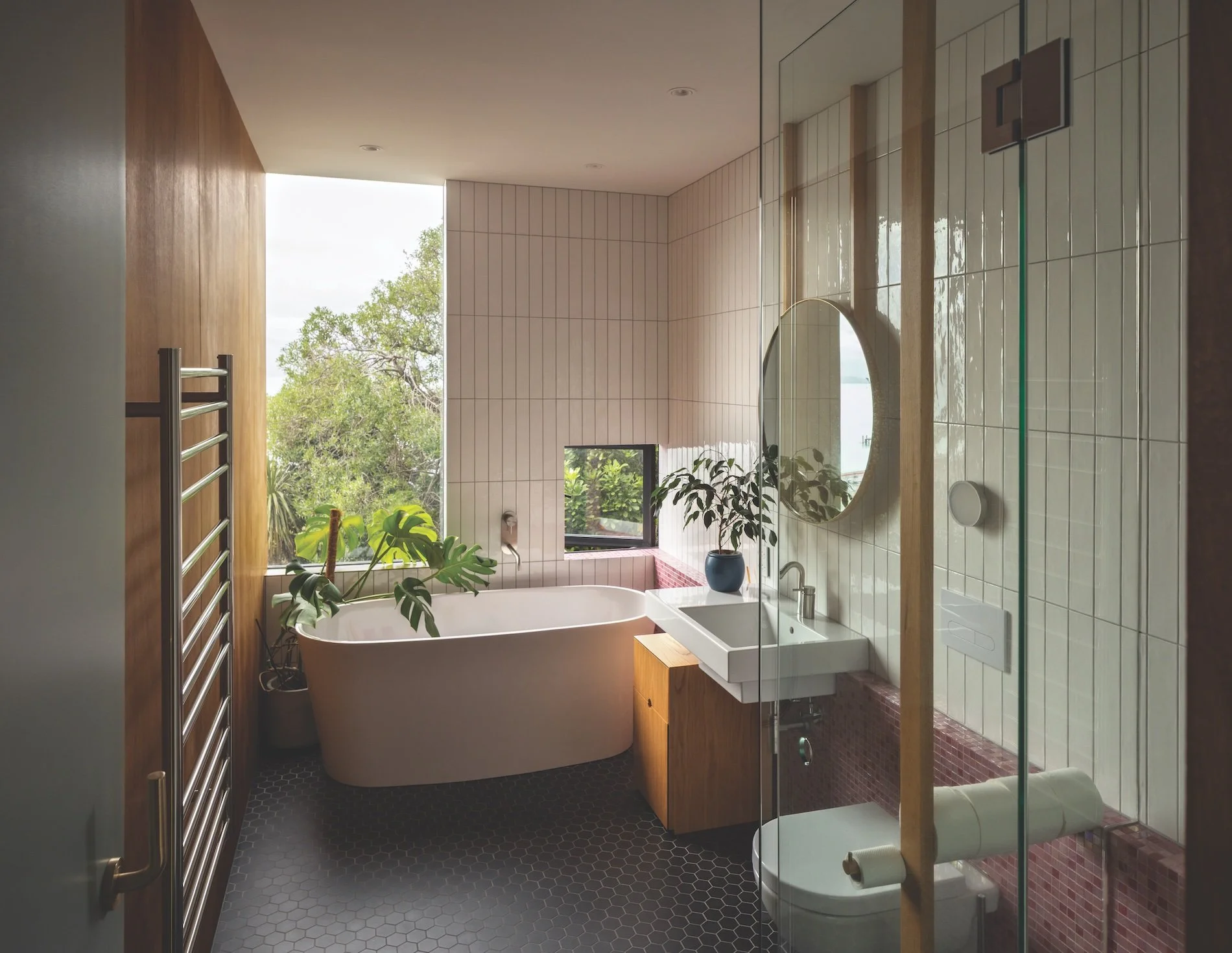
He says he used colour and timber consciously throughout to create a warm, friendly feel, especially given the extensive glazing. The only white is in the kitchen splashback tiles. “Just to get in a bit of texture and playfulness.”
There are more quirky touches. A small study is popped up in a bookend at the back of the house, accessed via a ladder. A glass panel in a hallway floor allows light into the downstairs entry, and a trampoline on one of the terraces is shared with some neighbouring families. A cable car has been added to access the house, which their kids are used to, but it can be so popular with their visiting friends that sometimes it has to be disabled.
Here and there green and yellow coloured glass plays with the light, referencing the sun-dappled surroundings – similarly, interior doors are pale blue with yellow-edged framing. All the glazing in the home was deserving of some careful consideration, given the spectacular views to appreciate. So in the lounge, the walls flare out to capture wider angles, and in the bedrooms, long, narrow windows allow snippets of the views from bed.
Aesthetics aside, a priority for Craig and Anganette was for a functional and healthy house, so it’s extremely thermally efficient with solar power and high insulation values. A mechanical ventilation system, in particular, keeps everything comfortable without opening windows to the buffeting Wellington winds.
The result is a home that’s so easy to live in, but the process of designing his own home was no mean feat. While the couple have undertaken several renovations, there are almost limitless options when it comes to a brand-new build, so Craig had to be decisive. “You could sit there designing houses on paper for the rest of your life, otherwise. I found it one of the hardest things I’ve ever done.” But Anganette had faith. “She was really trusting, and I’m really lucky in that regard. She loves it.”